
Deterministic Prompt Compiler
Scaffold turns underspecified requests into verified, production-grade specifications for Claude, ChatGPT, Gemini, DeepSeek, and Local LLMs — without calling an external AI API to do it.
Scaffold distribution and cryptographic verification are managed through BackEnd Hub.
Interactive Pipeline Architecture Overview
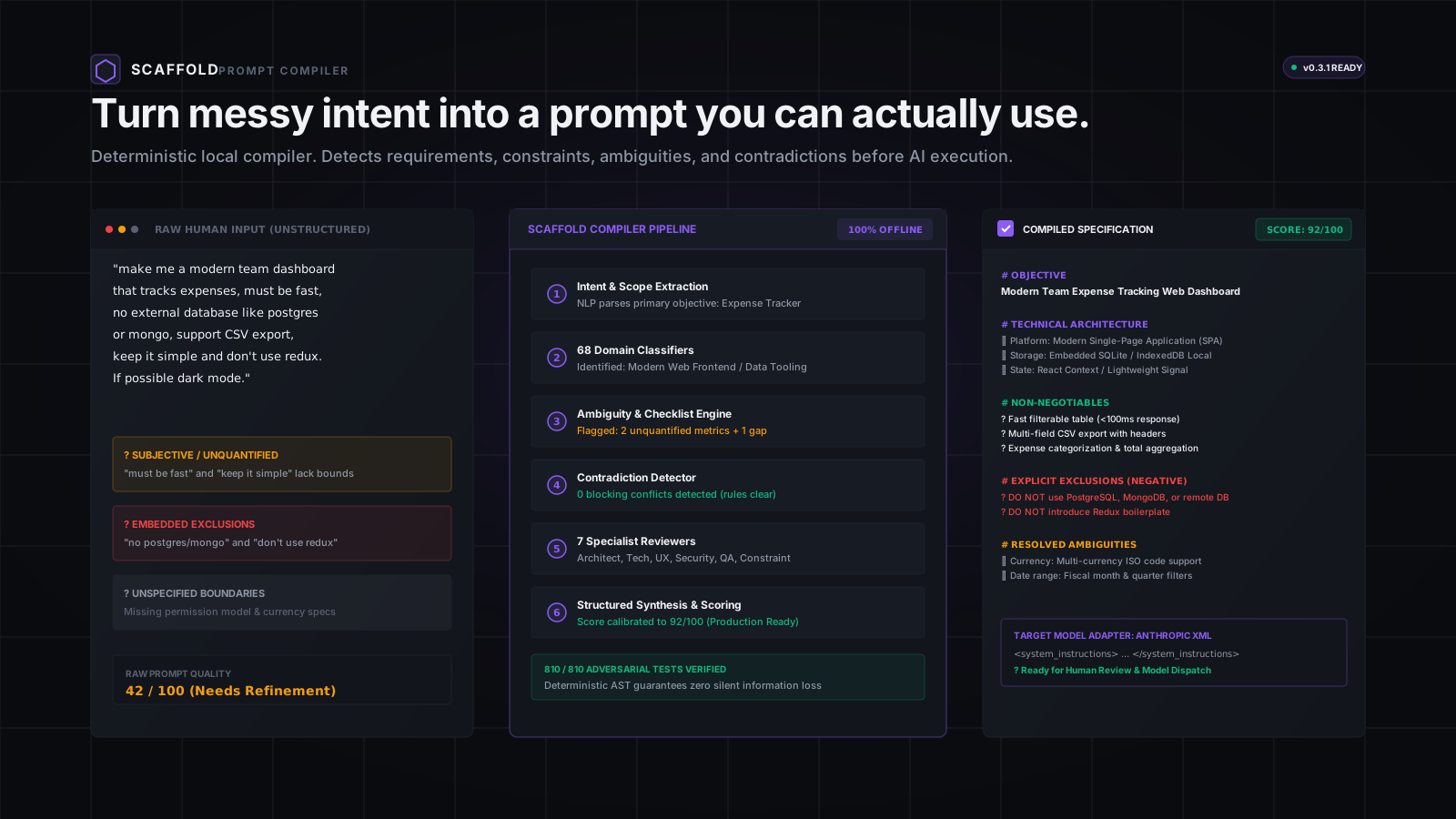
The Problem
Why raw prompts fail in production.
When you hand an underspecified prompt to a frontier model, you aren't programming it — you're rolling dice on whatever statistical assumptions its pretraining biases gravitate toward.
Underspecified Scope
You say "build an expense tracker." The model arbitrarily decides whether it's mobile or web, picks an arbitrary database, invents authentication flows you didn't ask for, and forgets data export.
Unresolved Contradictions
Prompts asking for "minimalist architecture with enterprise RBAC and real-time syncing" contain fundamental engineering tensions that models silently paper over until implementation collapses.
Ignored Exclusions
Phrases like "never use MongoDB", "no animations", and "don't create login walls" are notoriously lost in long attention contexts. LLMs routinely hallucinate the exact libraries you forbade.
The Pipeline
Deterministic deliberation. Not a prompt wrapper.
Scaffold doesn't ask an LLM to "rewrite" your prompt. It executes a formal, reproducible 6-stage compiler pipeline that inspects syntax, domain logic, constraints, and contradictions locally.
Intent & Technical Grammar
Offline NLP extracts actionable verbs, domain entities, and platform targets. Dotted framework identifiers like vue.config.js, System.Threading, and Three.js are preserved with zero token loss.
6-Dimension Ambiguity Engine
Systematically scores gaps across Objective, Platform, Scope, Format, Constraints, and Target Audience. Ambiguities are converted into explicit questions rather than guessed defaults.
Contradiction & Exclusion Analysis
Detects architectural friction (e.g., offline-first vs real-time push sync). Parses natural language negations ("don't", "avoid", "never") and records them as immutable non-negotiables.
7-Persona Deliberation Core
Architect, Technical, UX, Security, Creative, QA, and Constraint rule-engines review requirements from opposing stances. Every inference is linked to an inspectable audit decision trail.
Locked Canonical Facts
Confirmed design decisions and non-negotiables are locked into an immutable facts ledger. Downstream compilation passes are physically prohibited from overriding your locked answers.
Target Model Synthesis
Calculates a verified 0–100 Quality Score and emits optimized payloads tailored to your target model: Anthropic XML blocks, OpenAI Markdown hierarchy, Gemini Directives, or DeepSeek formal specs.
Side-by-Side
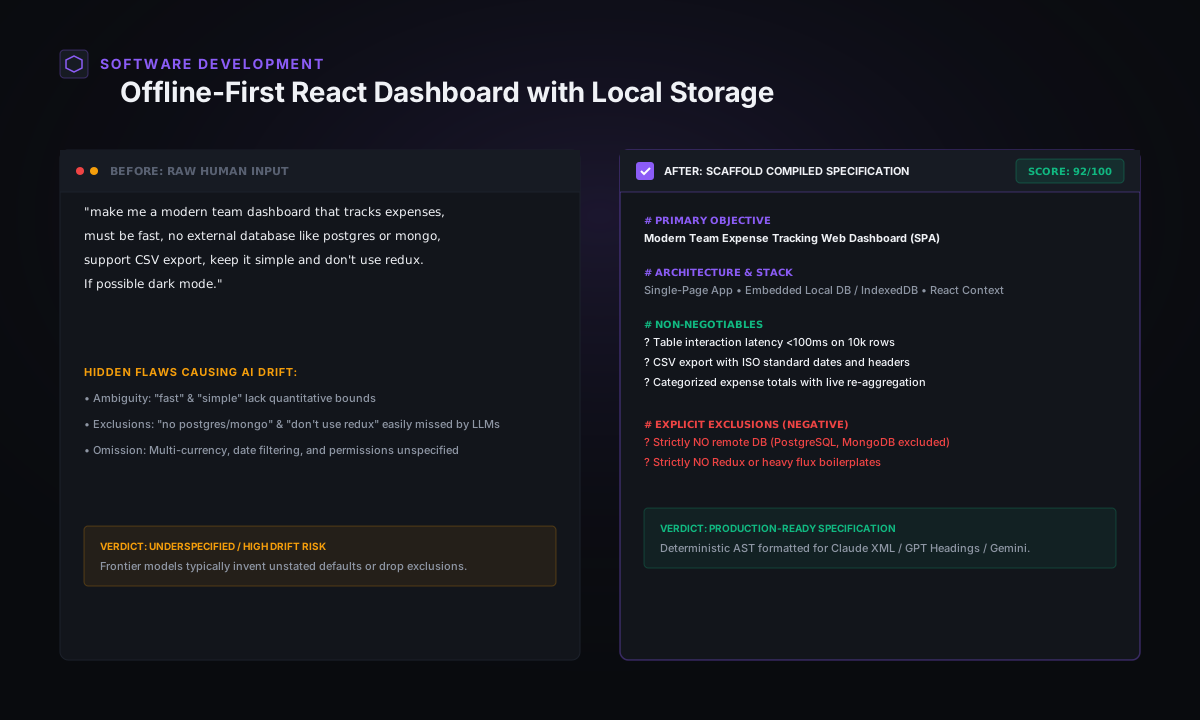
See the difference compilation makes.
Select a domain below to compare an underspecified raw input against Scaffold's compiled specification artifact.
Desktop Application
Built for developers who value precision.
A native, dark-themed Windows workspace powered by Tauri and SQLite. Fast, local, and completely free of telemetry or tracking.
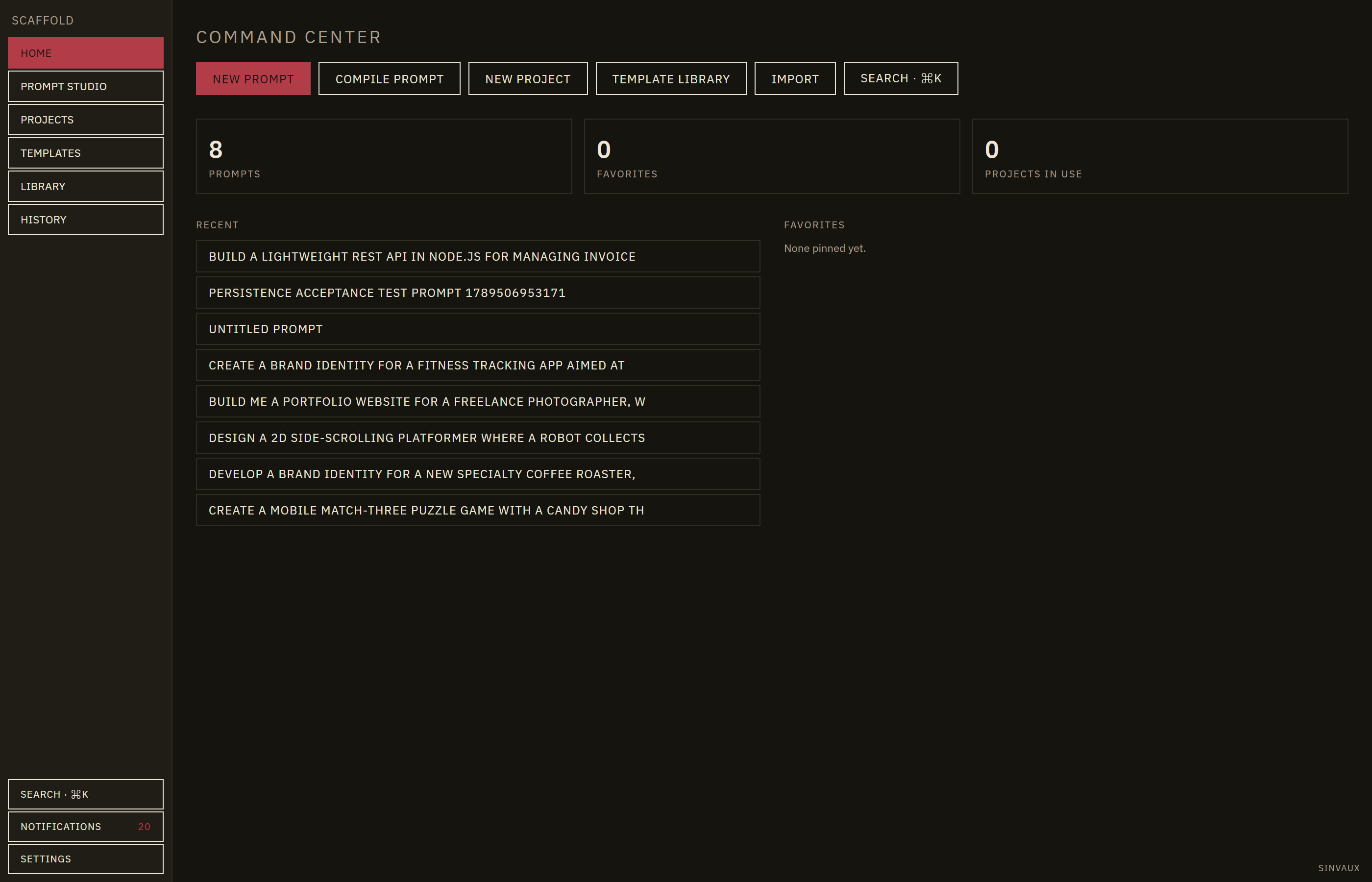
Home & Workspace Dashboard
Quick compile launcher, recent compiler runs, library templates, and compiler readiness status.
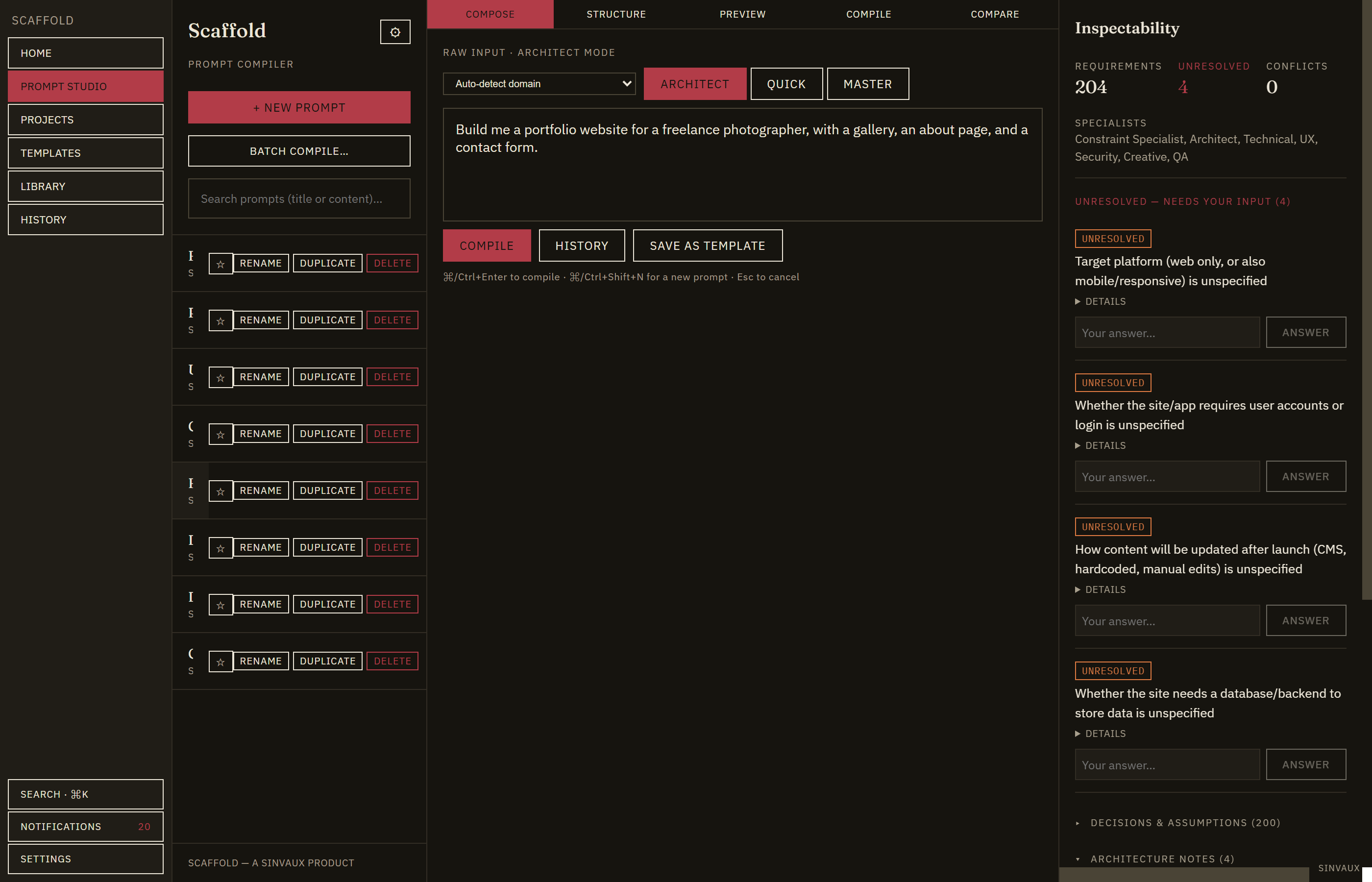
Prompt Studio & Mode Selector
Multi-line intent editor supporting Quick (1-pass), Architect (3-pass), and Master deliberation modes.

6-Stage Deliberation Flow
Visual pipeline tracking raw intent through ambiguity detection, conflict resolution, synthesis, and handoff.

Inspectability Drawer & Audit Trail
Inspect every persona decision, detected tension, resolved ambiguity, and canonical lock history.
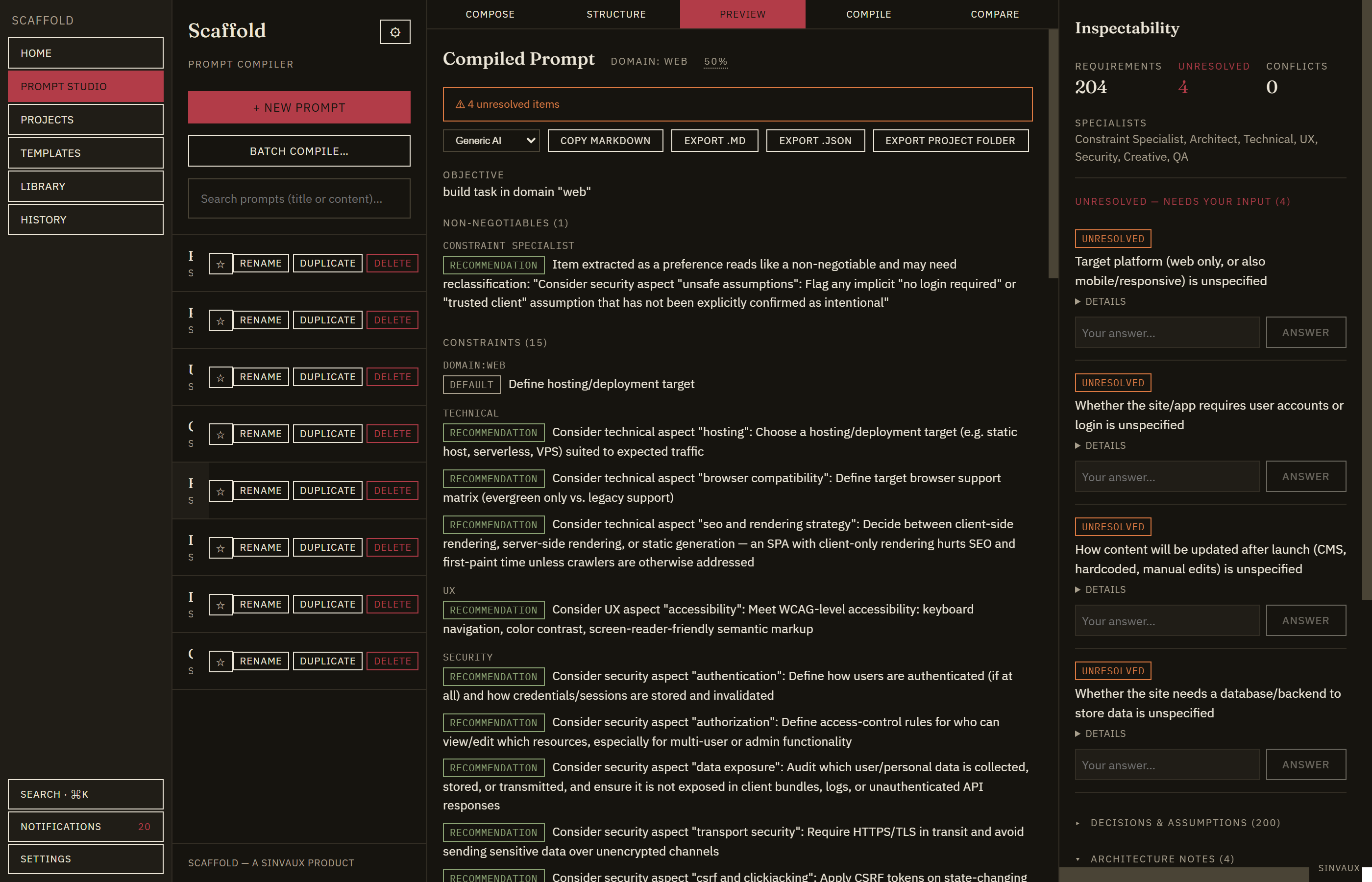
Quality Score & Compiled Artifact
Synthesized specification with objective, constraints, non-negotiables, and real-time quality score.
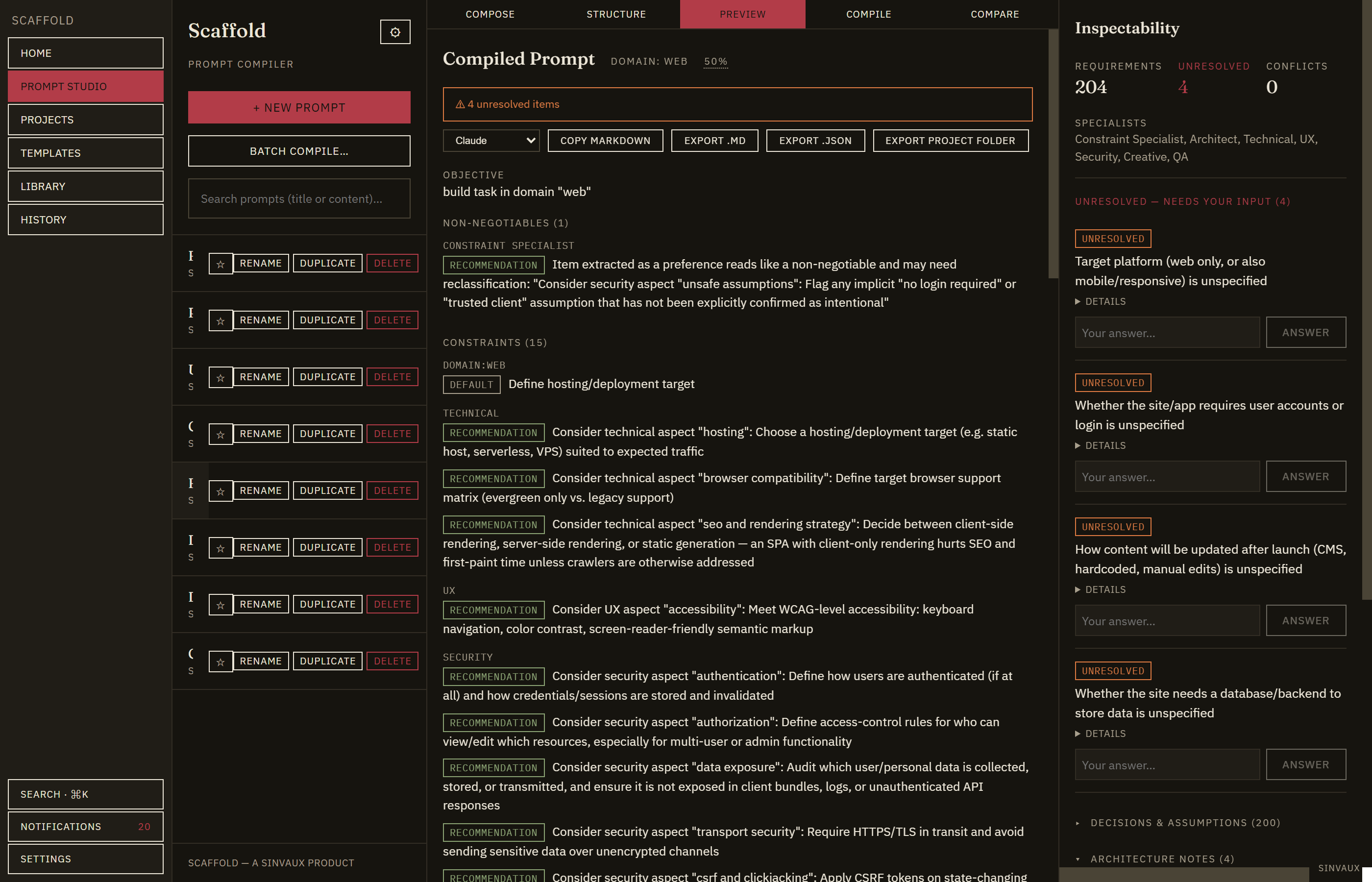
Target Model Handoff
Instant syntax transformation into Claude XML, ChatGPT Markdown, Gemini Directives, or Local LLM prompts.
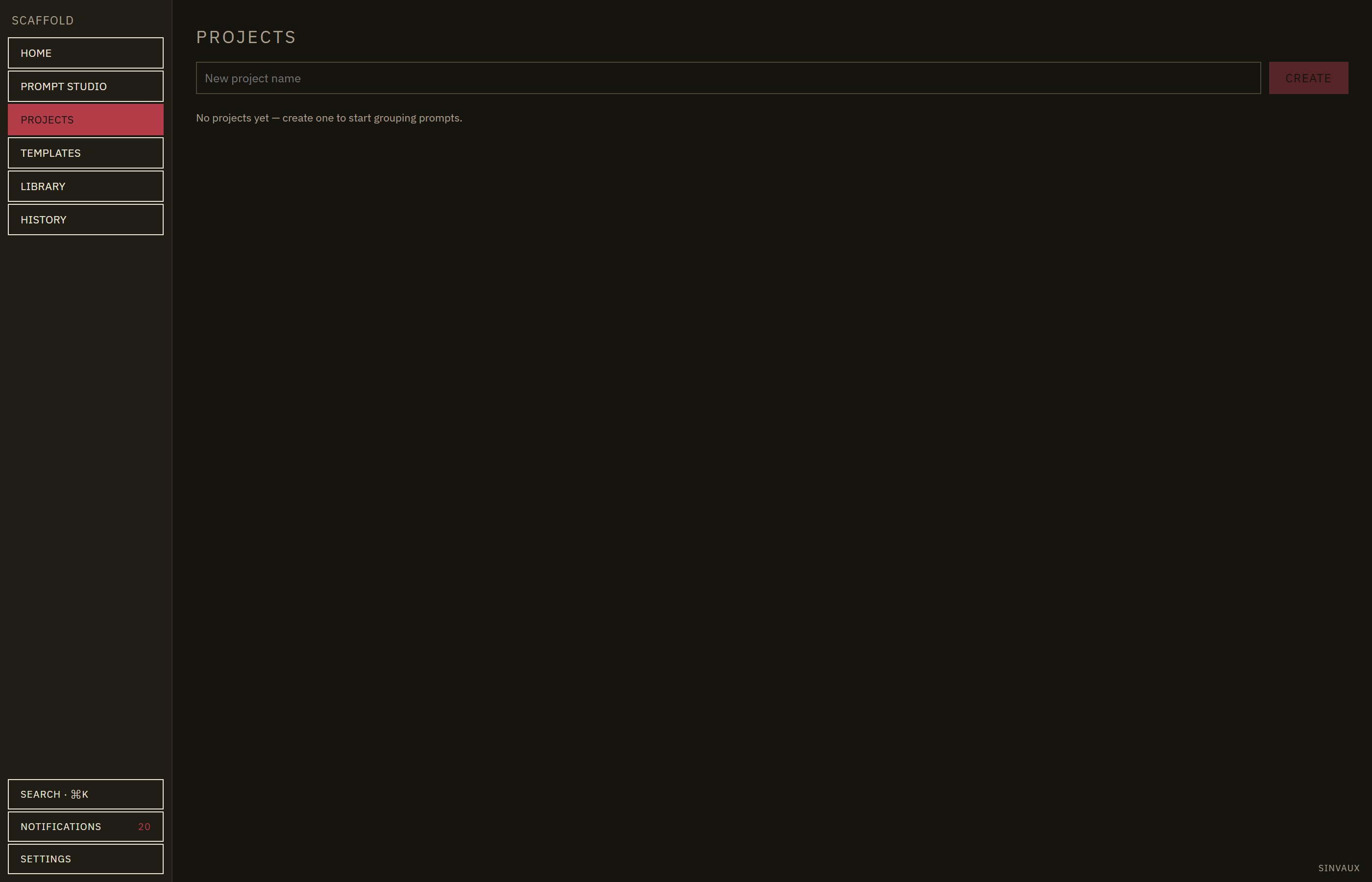
Projects & Specification Workspace
Organize related prompts into structured project groups with shared canonical constraints.
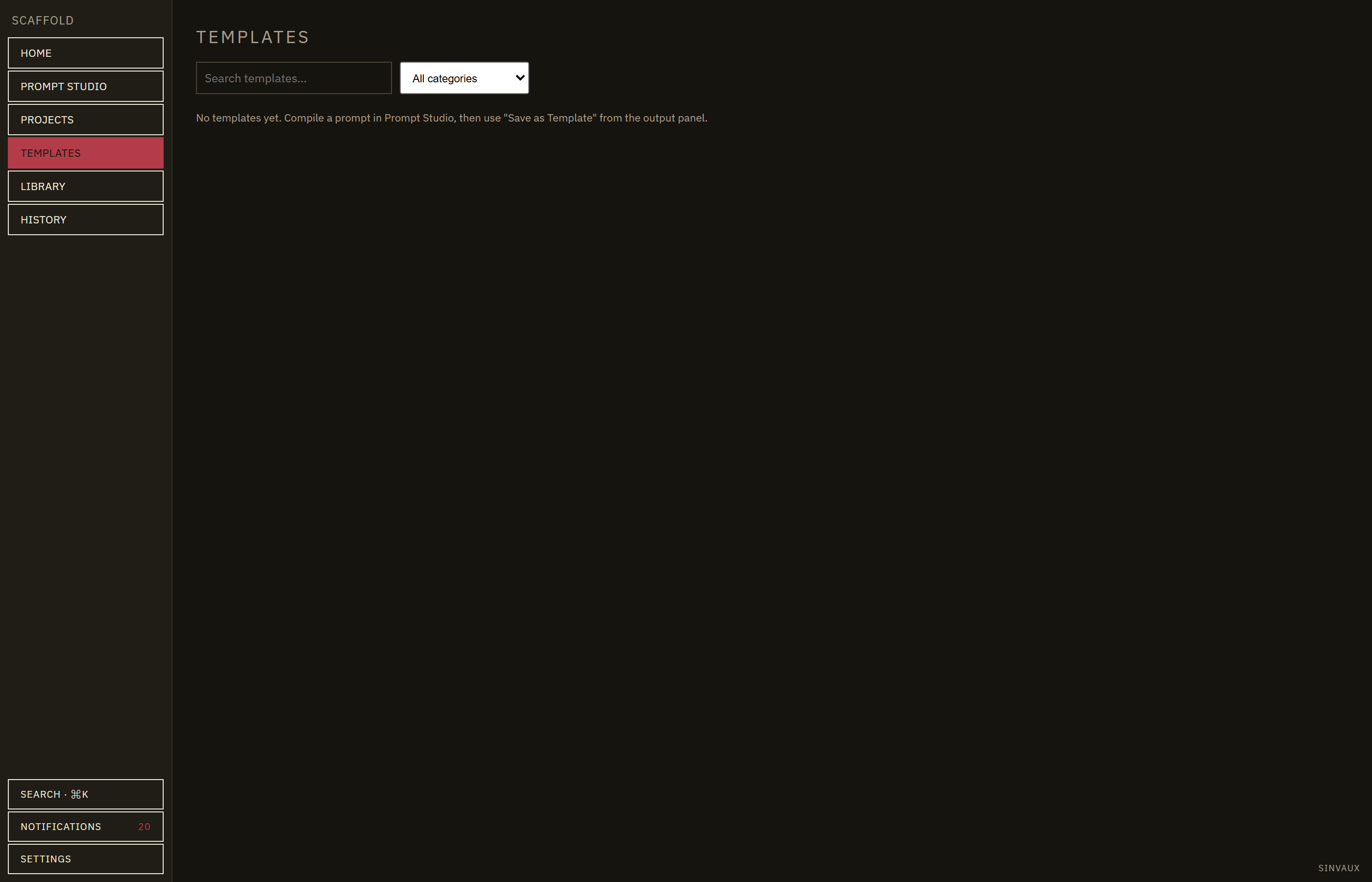
Prompt Templates & Starters
Quickly bootstrap architectural prompts from domain-curated templates and battle-tested patterns.
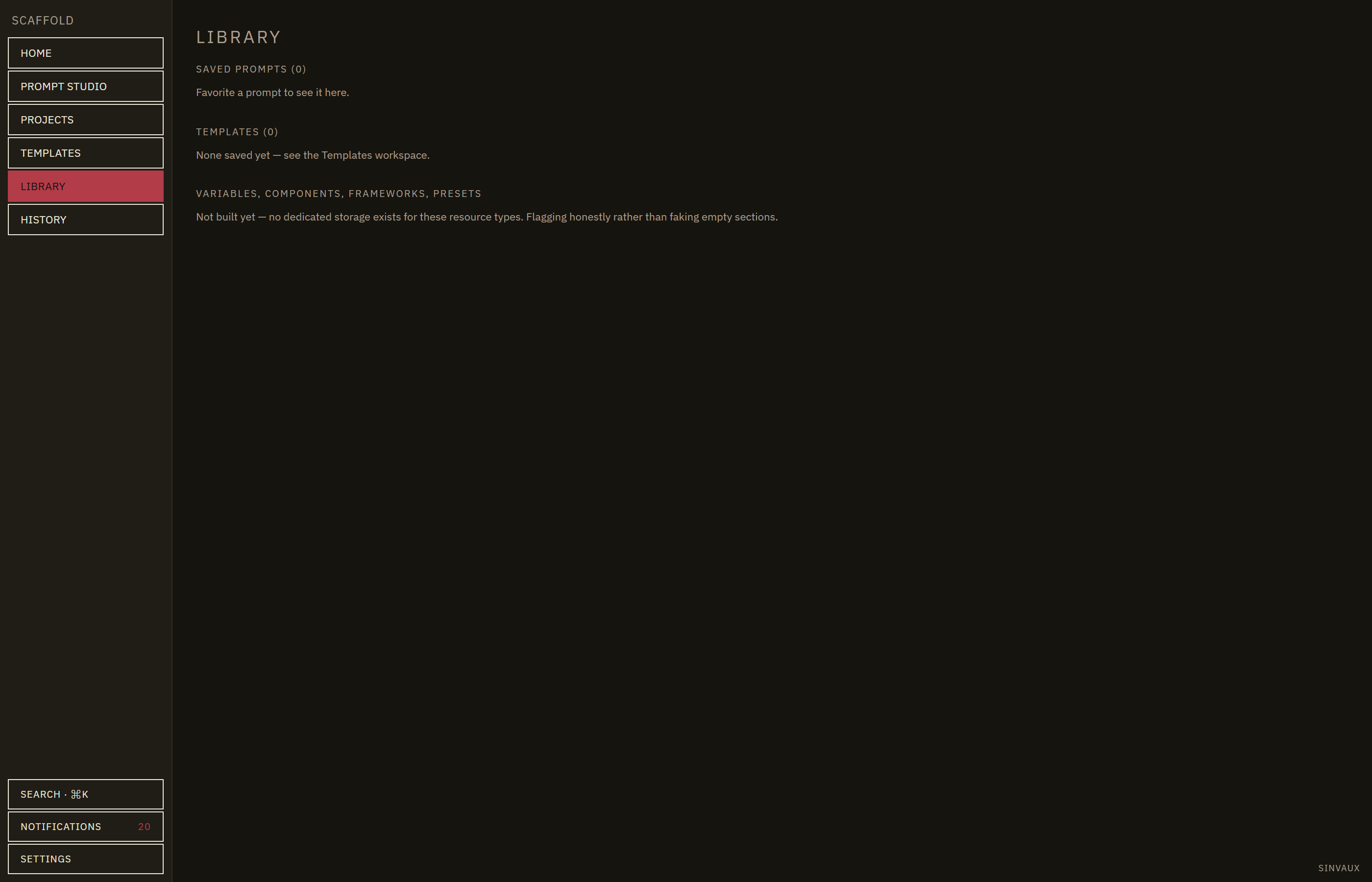
Local Library & Versioned History
Preserve your proven prompt architectures, versioned locally in an isolated SQLite database.
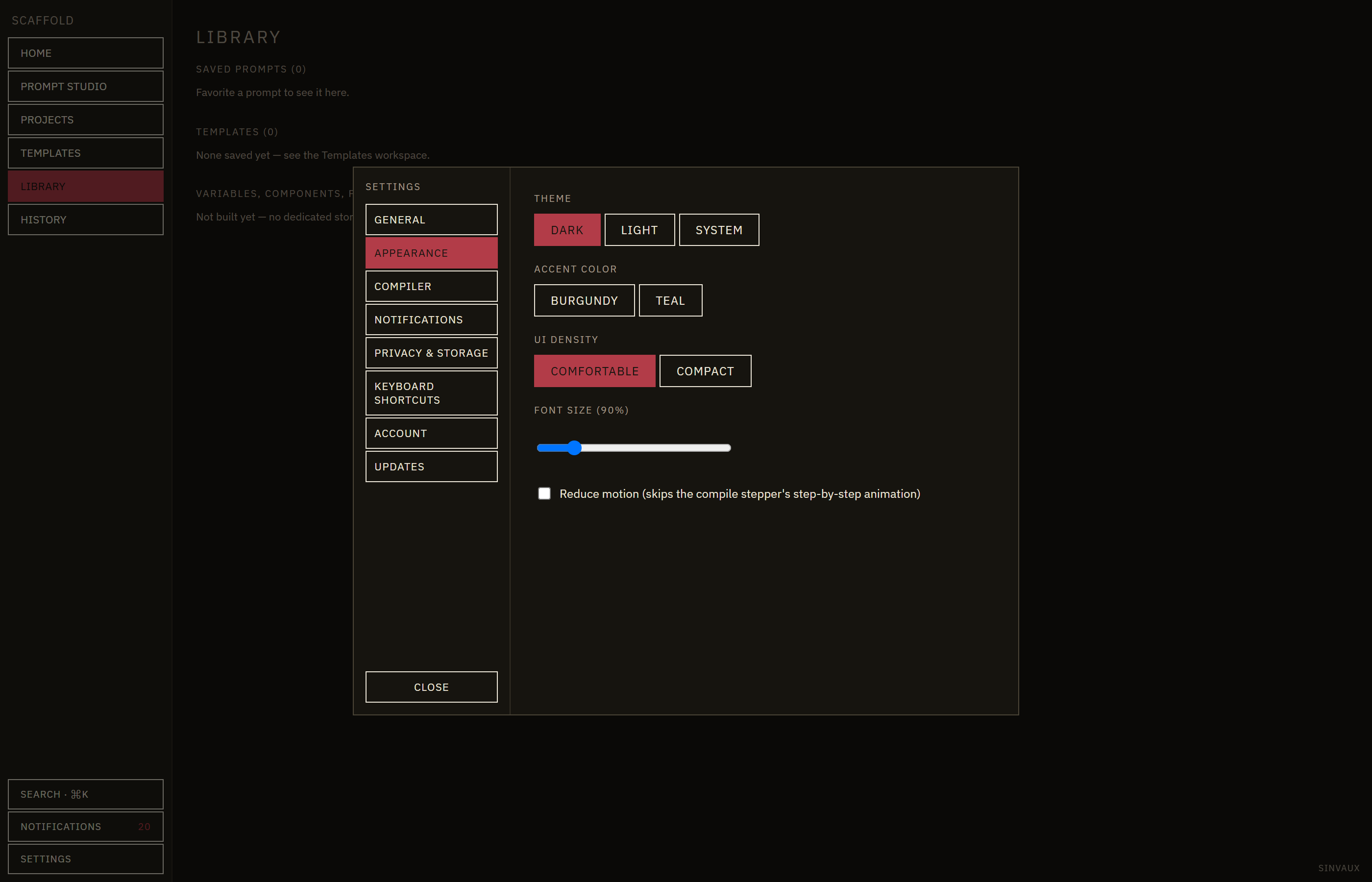
Studio Settings & Preferences
Configure model target presets, database backup intervals, theme choices, and appearance.
Verified Capabilities
Engineered to a strict test suite.
Every capability listed below is backed by verified regression tests. We do not advertise theoretical or planned capabilities as working software.
Technical Identifier Fidelity
File extensions, config paths (e.g. vite.config.ts, Cargo.toml), namespaces (System.IO), and versions (React 19) are preserved exactly without word boundary corruption.
Conversational Exclusion Extraction
Parses negative imperatives ("don't include auth", "never use Redux", "avoid third-party styles") and converts them into explicit model non-negotiables.
Multi-Pass Compilation Modes
Choose your depth: Quick (rapid baseline structure), Architect (full multi-pass evaluation with questions), or Master (exhaustive 7-persona deliberation).
Quality Scoring Metric
Evaluates prompt quality from 0–100 across Clarity, Specificity, Coherence, Feasibility, and Completeness. Penalizes vagueness and architectural contradictions.
Local SQLite Multi-Account Isolation
All prompts, compilations, and settings are stored locally on your machine with per-user schema isolation. Fully functional without an internet connection.
5 Native AI Handoff Adapters
Pre-formats compiled prompts for Claude (Anthropic XML tags), ChatGPT (Markdown structural headers), Gemini (Directives), DeepSeek (Mathematical/formal spec), and Ollama/Local.
Product Roadmap
Honesty in software: What is real vs what is next.
We believe in setting clear boundaries. Here is exactly what is shipped and functional today in v0.3.1 versus what is under active engineering.
Available Today (v0.3.1)
Production ReadyShipped in the native Windows installer and verified across 810 automated tests.
- 100% offline, deterministic prompt compiler engine
- 6-stage deliberation core with persona review
- Contradiction detection and conversational negation parsing
- Dotted technical keyword & file path preservation
- Target model adapters for Claude, GPT, Gemini, DeepSeek, Local
- Local-first SQLite storage with multi-account isolation
- Interactive Inspectability drawer and decision audit log
- Dark developer desktop UI built with Tauri and React
- Custom prompt library, tags, and reusable templates
Future Engineering Roadmap
In DevelopmentPlanned updates and extensions. We will not announce release dates until software passes verification.
- End-to-end encrypted cloud workspace backup (optional)
- Chrome & Firefox extension for direct 1-click paste into web AI chats
- macOS (Universal) and Linux (.deb / AppImage) native desktop builds
- Custom user-defined persona authoring and evaluation rules
- Local LLM execution runner integration (Ollama / llama.cpp bridge)
- Team prompt library sharing with granular role-based permissions
Ready to compile your prompts?
Download Scaffold v0.3.1 for Windows. No API keys required, no subscription walls for local compilation, and zero cloud telemetry.
Scaffold is managed, verified, and launched through BackEnd Hub.